 |
||||
 |
||||
 |
|
|
|
|
 |
||
|
|
|
 |
|||||||||||||||||||||
 |
|||||||||||||||||||||
 |
|||||||||||||||||||||
|
|||||||||||||||||||||
Repeater Section Antenna Section |
|||||||||||||||||||||
Repeater Issues
|
|||||||||||||||||||||
|
|||||||||||||||||||||
Custom Applications Most homes or buildings are easily covered by one of our base repeater systems. Some buildings are larger or have multiple areas inside that need coverage. You may need longer cables, more than 2 coverage antennas or other items in order to fully cover your building. We can make (almost) any cable length and can help design a system that fits your application. Please call or email us. We're here to help. 1(800) 238-2811 |
|||||||||||||||||||||
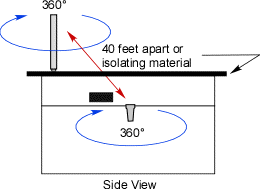
Isolation and Separation You may have already read this term previously in this tutorial. Isolation refers to the proper distance or separation needed to keep the Donor antenna signal pattern and the Coverage antenna signal pattern away from each other. They must be isolated from each other by separation or other means. Isolation becomes particularly problematic when omni-directional antennas are used for both the Donor and the Coverage antennas. Since these antennas transmit in a circle (or more accurately a sphere) it is very easy for these spheres to overlap and thus negate the repeater system. Note: All of our repeater systems have isolation control which shuts down the repeater if the donor and coverage antenna patterns overlap. Though you would not achieve any benefit from a repeater system that is in a shut-down mode. Typically when omni-directional antennas are used for both the Donor and Coverage antennas, a minimum distance (or separation) is specified in order to keep the two antenna signal patterns from overlapping. |
|||||||||||||||||||||
 |
|||||||||||||||||||||
|
|
|
|
|
|
|
|
|
|
|
|
|
|
|
|
|
|
|
|
|
|
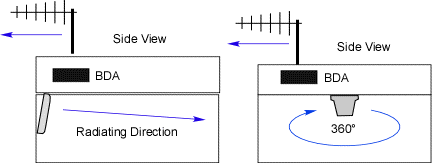
Isolation is not usually a problem when a directional antenna is used for the Donor and/or the Coverage antenna. Of course, pointing either antenna at the other would cause a problem and should not be done. In addition, since directional antennas have a narrow pattern, compared to an omni-directional antenna, it is unlikely they will overlap when the directional Donor antenna is high up on the building and the Coverage antenna is low inside the building (in most cases). |
||
|
|
|
 |
||
|
|
|
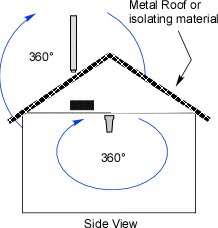
Lastly, isolation can be achieved by the same things that cause reception problems in the first place. Those things being concrete, steel, brick, aluminum, etc. Placing these materials between the antennas prevents their signal patterns from overlapping. For example, your building has a metal roof and you install the Donor antenna above the roof and the Coverage antenna below the roof. The antennas are effectively isolated. |
||
|
|
|
 |
||
|
|
|
 |
||||
 |
||||
|
|
|
|
|
|
|
|
 |
||||||||
 |
||||||||
 |
 |
|||||||
|
|
|
|
|
|
|
|
|
This Site Copyright ©1996-2011 Criterion Cellular. All Rights Reserved. Some logos and graphics used are trademarks of their respective owners. Prices subject to change without notice. Not responsible for typographical or photographical errors. Some products may not be available in all areas. All prices are in US dollars. We reserve the right to modify product pricing and/or specifications without prior notice. We do not sell or rent our customer information - Privacy Notice. Site questions / comments / problems mail to Webmaster |
||
|
|
|
 |
||
|
|
|
. |
||
|
|
|
Antennas |
Amplifiers |
Adapters |
Repeaters |
Car Kits |
2.4 - 5.8 GHz |
Components |
Company |
Learning Center |


Verizon, AT&T, Nextel & Sprint Reception Experts Since 1990